90 days. Off every grid.
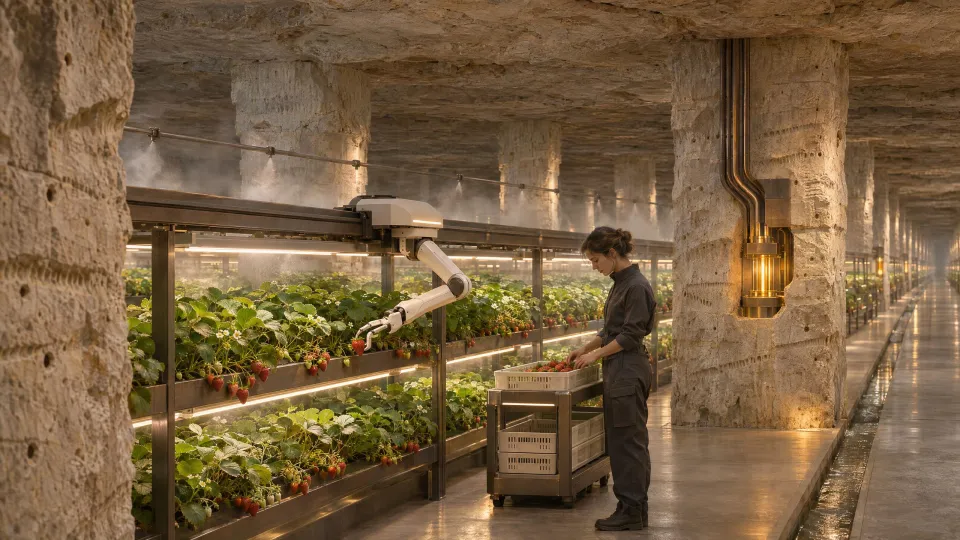
Food, grown under light in old limestone mine galleries.
Greens and strawberries, picked every day.
 Next: water
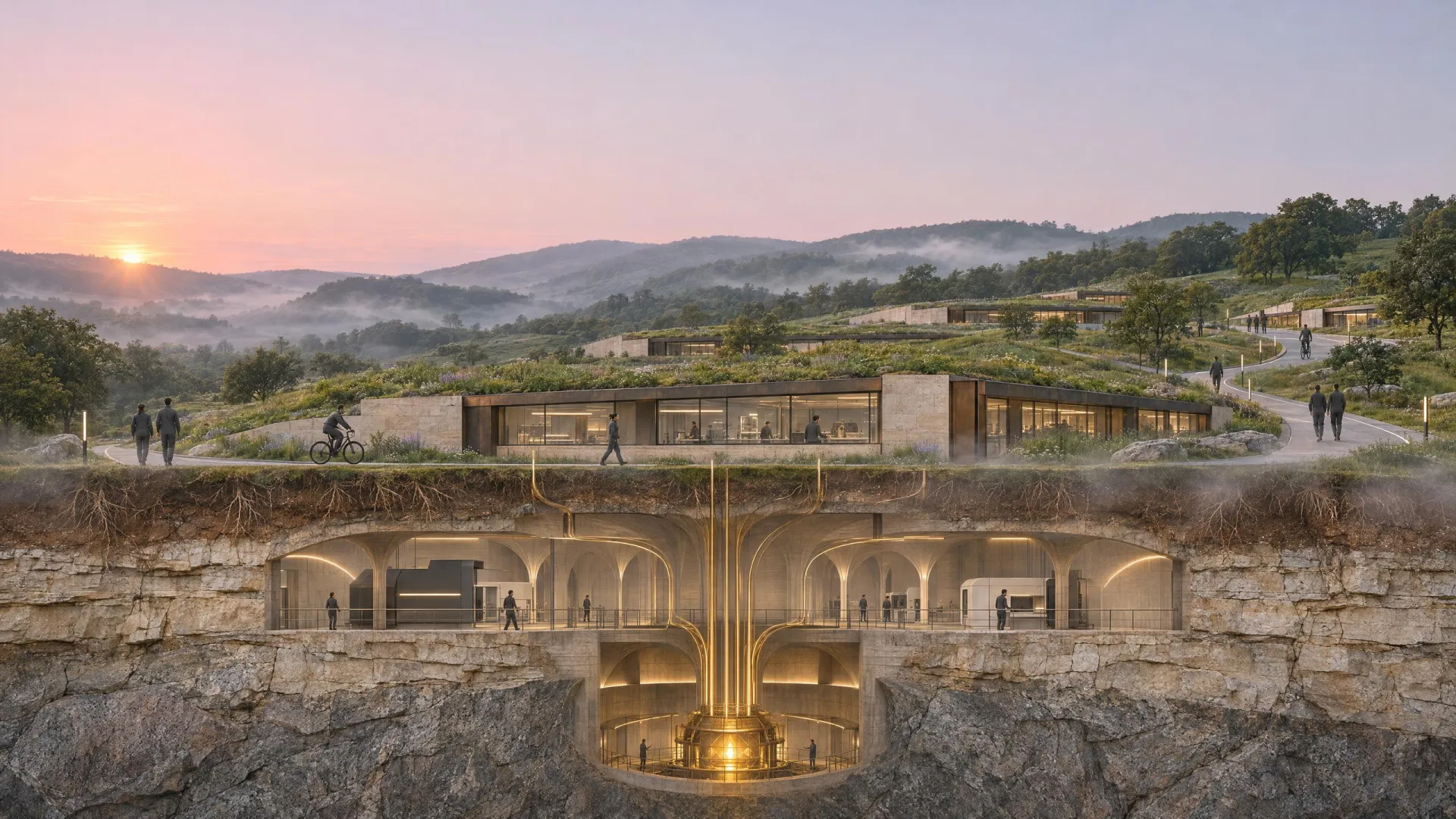
A concept vision for the next century’s installation. It begins with its own energy at the core.
Watch the teaserIts nose stands above the land. Its floors are below it, in the rock, and they open.
Copper-shielded halls run back into the hill. A gantry robot works the cabinets; carriers run the gold line.
Greens and strawberries in tiers under warm light, picked by arms that ride the rows. Food for ninety days, grown in the rock.
The line of light down the middle of the mark is the way through. Every level opens onto it, and it runs on down to the core.
Rooms along the slope of the wing and people at work. Behind the glass are the teaser’s own rooms.
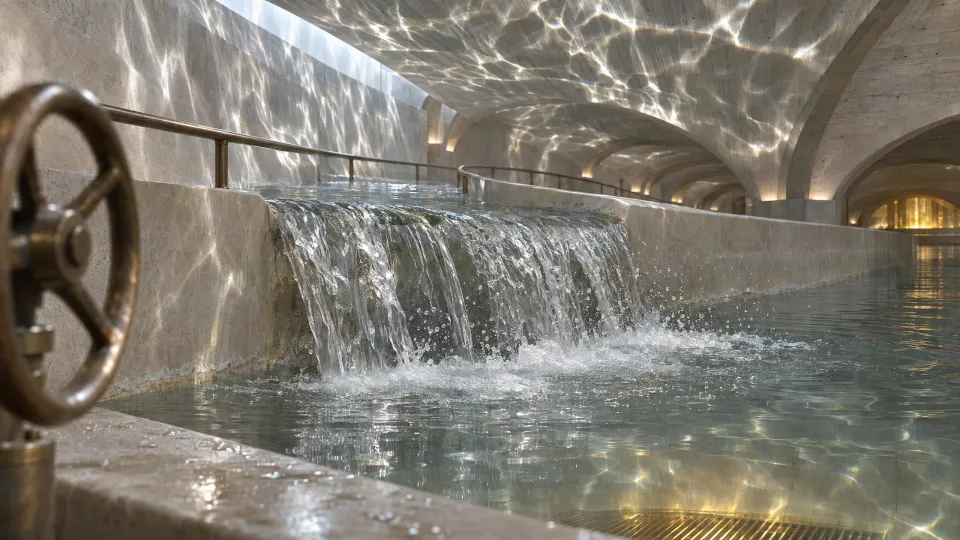
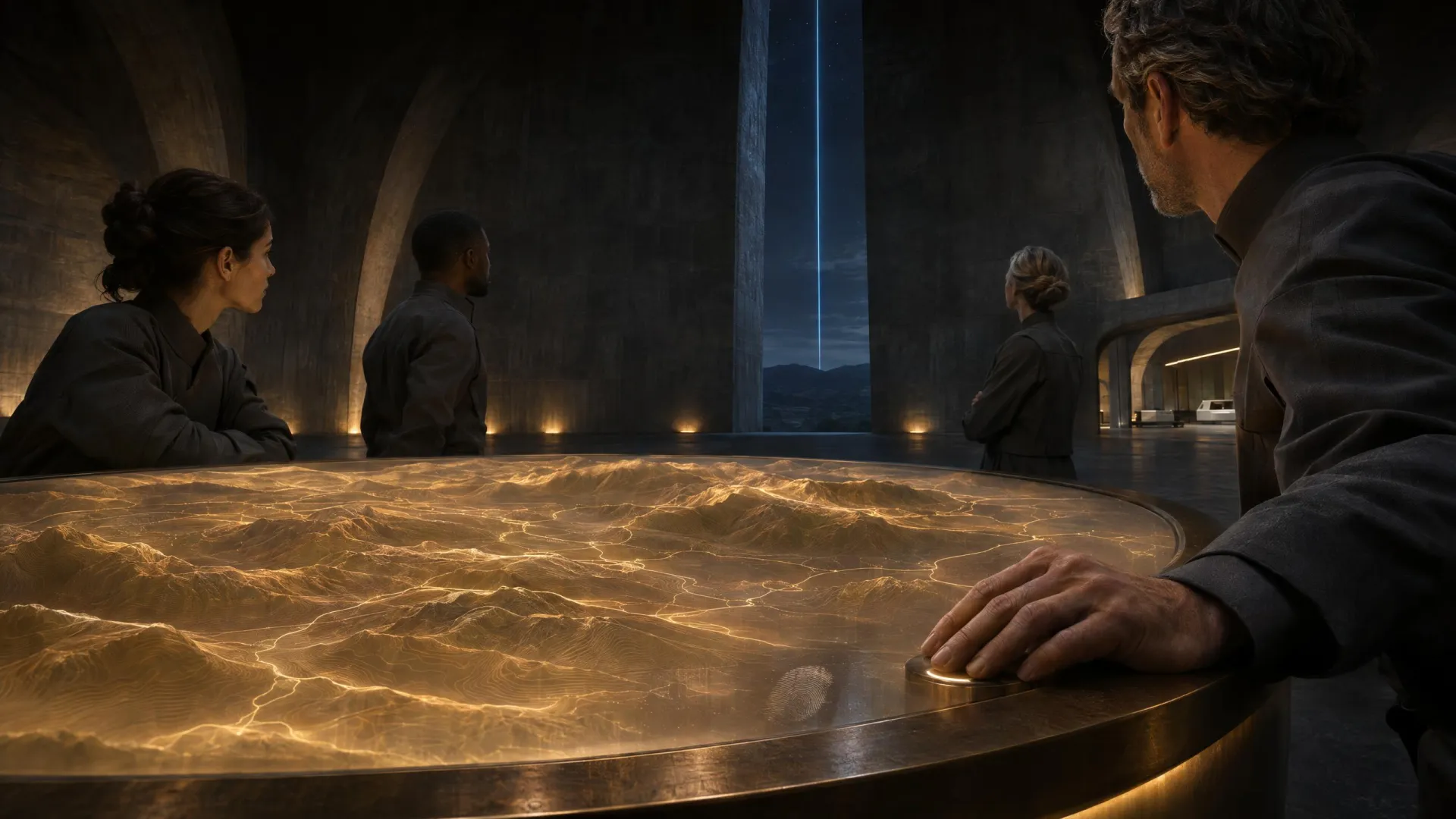
Reclaimed water runs clean down a stone channel to the command table, where a person makes the call.
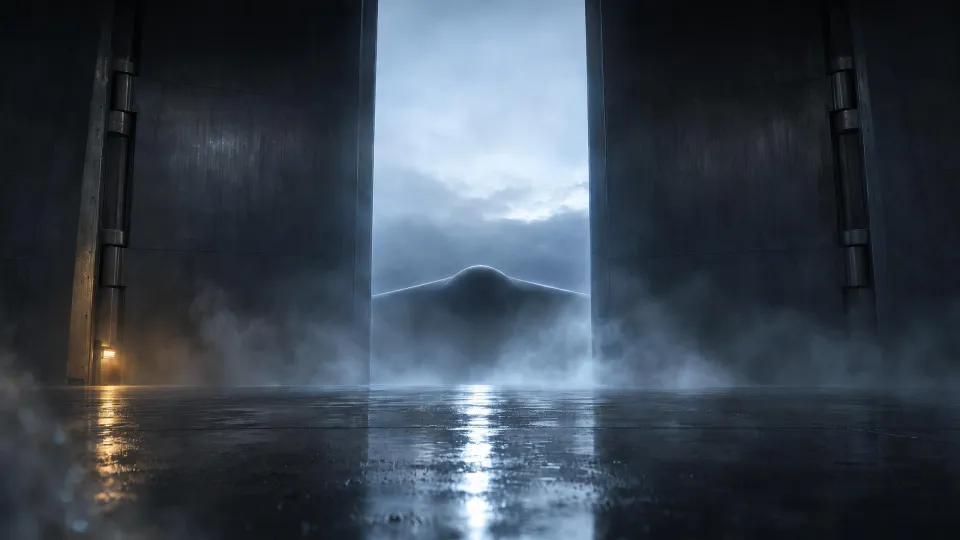
The trailing edge of the mark is the hangar. On a polished deck, something waits, lit along its leading edges.
The first thing built
is the base’s own power,
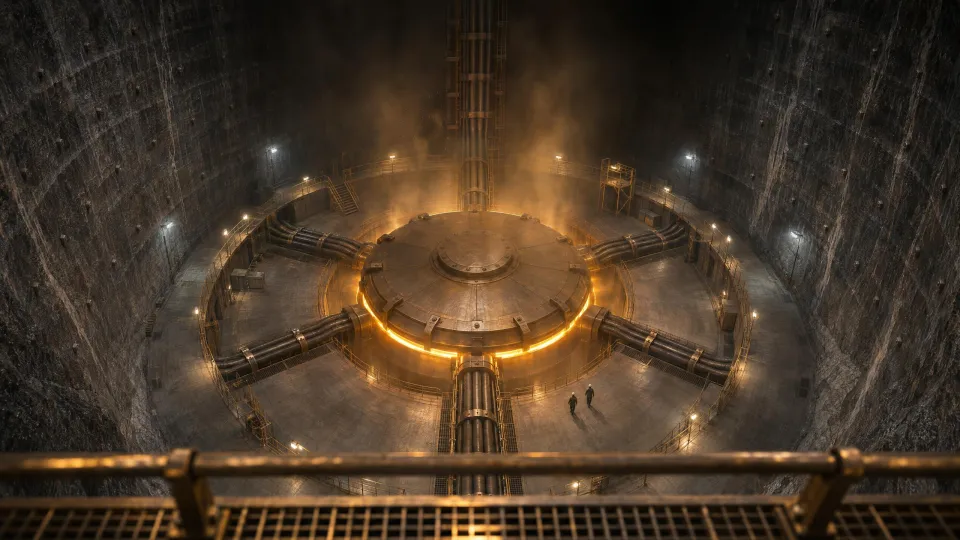
sealed in rock below it.
Everything grows from it.
Most installations spend a century leaning on a grid, a pipeline and a highway they don’t control. This one starts underneath.
At the core. A reactor sealed in granite, a thousand feet down, carries every load on the base: the compute hall first, then everything above it.
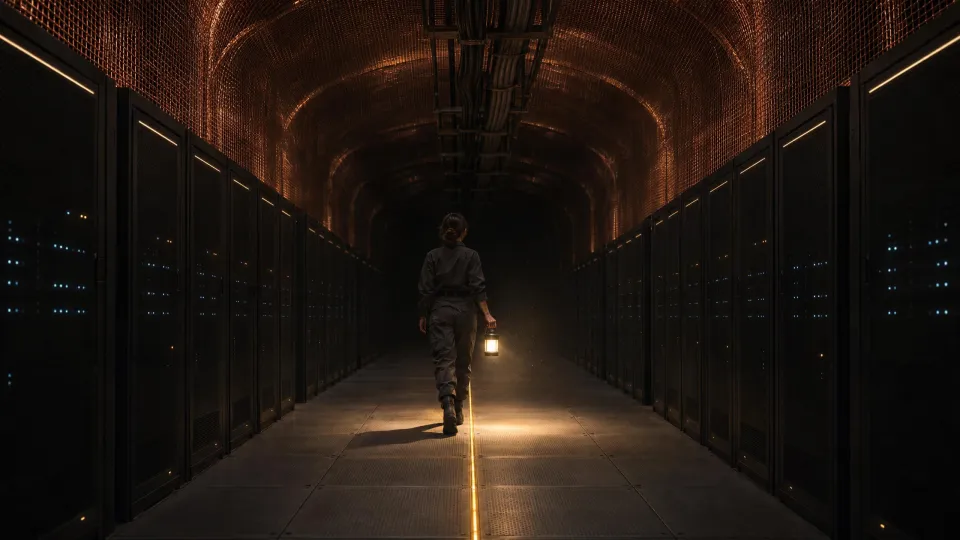
Beside it. The compute hall runs in rock, shielded in copper, where heat, weather and attack reach it last. Its waste heat helps make fresh water.
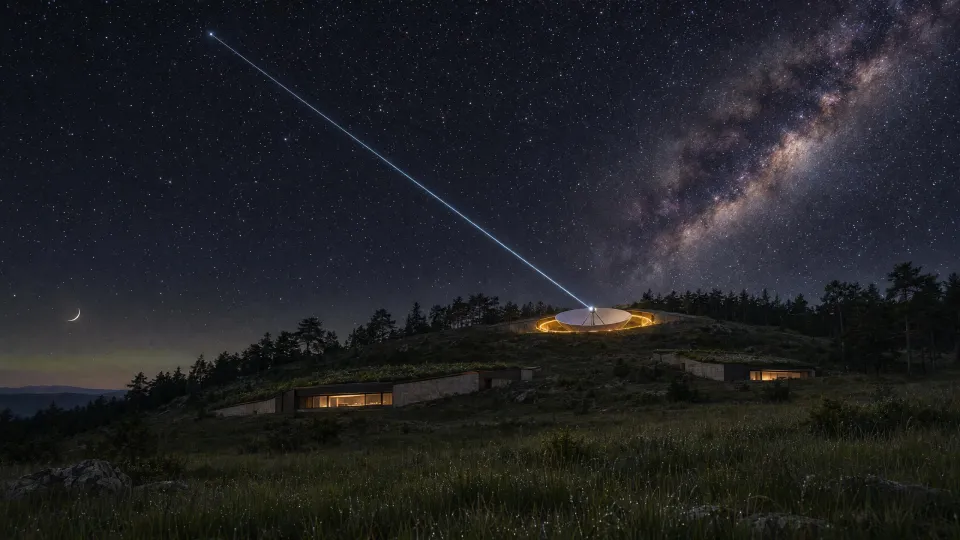
Above it. The data that runs the base stays on site, and reaches orbit by the base’s own beam.
Its light runs up through the stone to every building above. Pick one flow to follow it.
The reactor, the compute hall, the data and the water all branch from one place.
The ground under a base is acreage too. Hardened galleries sit along the branches, lit as the light reaches them.
Now watch the lines that come in from outside go dark. The base keeps its own lights on.
Food, grown under light in old limestone mine galleries.
Greens and strawberries, picked every day.
Next: water
Used water is reclaimed and runs clean back through stone channels.
Nothing piped in from outside the fence.
 Next: power
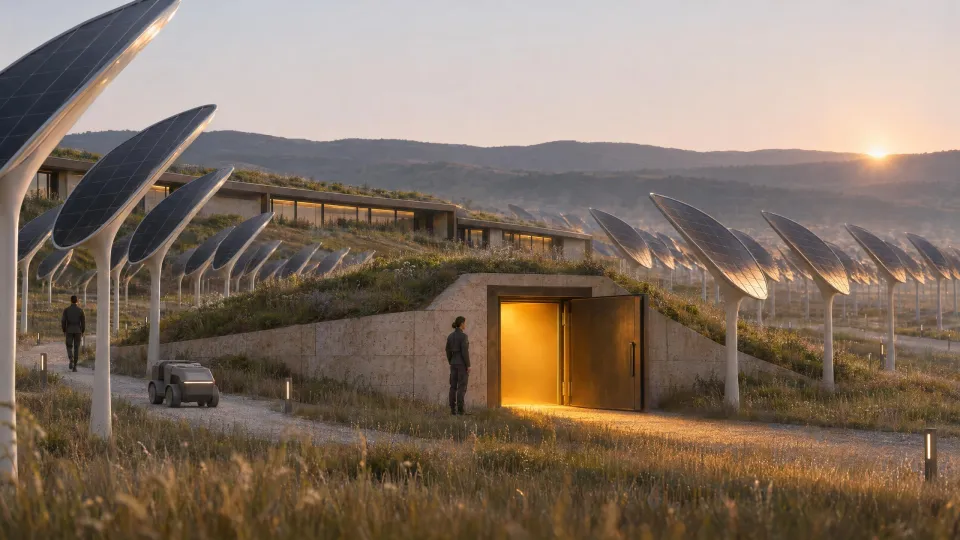
Collectors on the plain turn to the first sun; the core carries the night.
If every outside line failed, the lights stay on for ninety days.
 What the base runs on
Hover or tap a name to read what it is.
Sensor posts along the perimeter, a ring of sensing over the airfield and directed-energy defence on the ridge watch land, air, space and the network at once. Most nights it stays quiet.
Humanoid robots move cargo, carriers run the galleries and printers lay new walls from the ground they stand on. Each is a version of something already working somewhere today.
Machines watch, sort and suggest. Every call that matters is made by someone standing at the table beside the core.
Dinner in the commons with the neighbours, the hills dark outside the glass.
See it in the teaserLong, low buildings under grass, lanes instead of parking lots. Nothing rises above the hills.
Before dawn it glides up to the house; the gate reads it on the way in without stopping it.
The base keeps growing while people live in it: the gantry lays a fresh wall of the site’s own soil.
A humanoid loads the carrier while two people check the manifest.
Forty-seven seconds. It opens inside the hangar and ends at dawn over the hill, with cards and score and no narration.
Each base stands on its own, and none stands alone: a beam ties it to orbit, and every new base built from the template shares what it learns.
A concept vision, November 2026.
Brand guidelines